
Agency Without Magic- Why Methodic Stoicism Doesn’t Need Free Will to Keep You Free
A Secular Stoic Argument for Naturalism- Part 6

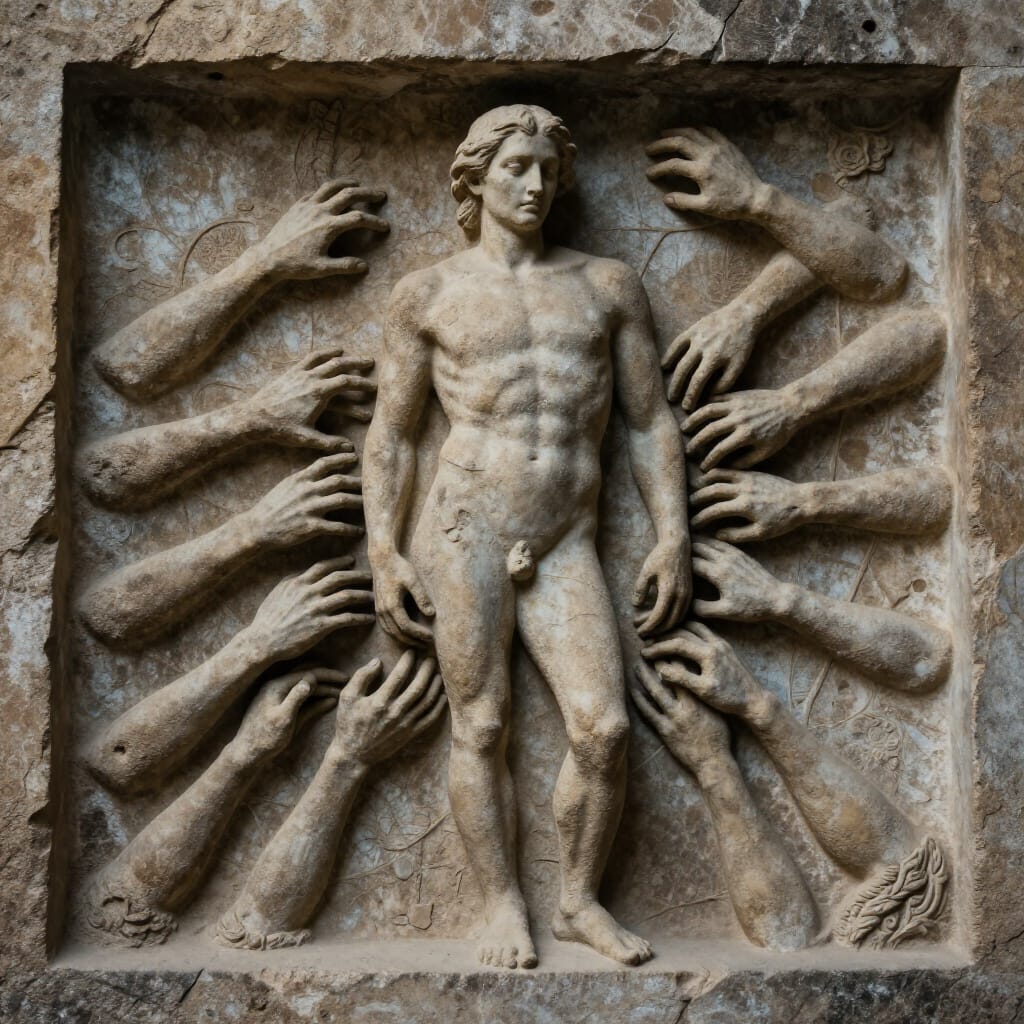
There’s a perennial anxiety that surfaces whenever someone notices Stoicism’s deterministic leanings: If everything is caused, what happens to my agency?
Modern readers often think that without some metaphysical exemption clause—a soul floating outside causation, a libertarian free will untouched by physics—they are reduced to puppets.
Methodic Stoicism rejects that anxiety.
Not because it denies causation, but because it redefines agency in a way that survives determinism intact.
The short version:
You don’t need metaphysical freedom to act freely. You only need to understand the layer of reality where your capacities actually operate.
Let’s crack that egg.
The Myth of the Uncaused Chooser
Many contemporary Stoic interpretations smuggle in a kind of “ghost freedom”—the idea that my choices float above physics and fate. But this leads to incoherence.
If your actions are truly uncaused, they become:
unpredictable,
unintelligible, and
disconnected from your character.
An uncaused act is not an expression of your agency. It’s a cosmic coin toss. Methodic Stoicism discards this idea as unnecessary metaphysical baggage.
You don’t need to break causation to be an agent. You need to understand where your agency is nested within causation.
Think of a software agent inside a larger system.
It doesn’t control the operating system, electricity grid, or the laws of computation—but within its domain, it acts, chooses, and updates.
Your agency works the same way.
Agency as a Set of Capacities, Not a Magical Exemption
In Methodic Stoicism, agency is simply:
your capacity to revise your judgments, redirect your attention, form intentions, and act on reasons.
These are natural capacities, not supernatural ones. They arise from:
neural plasticity,
social learning,
language,
memory,
and the ability to model consequences.
Nothing about causation undermines these capacities. Causation enables them.
Just as a chess engine operates within the rules of chess, a pilot within aerodynamics, and a musician within tonal harmony, human agency operates within causation.
Freedom doesn’t require you to hover above the universe. It requires you to function coherently within it.
A Modern Analogy: The Electric Car and the Driver
Consider a modern electric vehicle. You don’t control:
physics,
lithium ion chemistry,
traffic laws,
where the roads are built,
or the fact that the battery will degrade over time.
But you do control:
braking,
accelerating,
turning,
planning your route,
choosing when to charge,
deciding not to text while driving.
Your agency is real. It’s just not total.
You operate a limited but meaningful decision space nested inside a much larger causal architecture.
Stoicism’s point is simple: Operate well inside the space you actually occupy. Don’t fantasise about a space you don’t.
The Neuroscience Angle: Determined Doesn’t Mean Helpless
Modern neuroscience reinforces this view. Your decisions arise from:
neural pathways,
executive function,
inhibitory control,
evaluation of future outcomes,
learned models of value.
These processes follow physical laws. But they are still your processes—the ones belonging to this organism, shaped by your history, your learning, and your reasoning. A determined capacity is still a capacity.
The fact that your arm muscles operate through biochemistry doesn’t make them less yours. The fact that your reasoning operates through neurons doesn’t make it less yours either.
Agency is what your organism does, not what it floats above.
What a Methodic Stoic Actually Does With This
Methodic Stoicism says:
“Stop obsessing about whether the universe could have gone differently.
Focus on what you can do differently within this universe.”
The practical implications are profound:
You stop waiting for a metaphysical permission slip before acting.
No more:
“I need to know if free will exists before I fix my habits.”
“If my personality is caused, maybe nothing matters.”
This is procrastination disguised as philosophy.
You make peace with your constraints.
Real constraints:
biology
illness
temperament
social structures
time
energy
You work coherently within them, not resentfully against them. You double down on the capacities you actually have.
Your ability to:
evaluate your thoughts,
reframe events,
set priorities,
discipline attention,
modify behaviour over time,
remains entirely intact.
Determined, yes. Meaningless? Never.
The Best Modern Example: Addiction Recovery
Addiction therapy provides one of the clearest illustrations of agency without metaphysical freedom.
No addiction specialist tells sufferers:
“Just choose differently!”
“You have libertarian free will!”
“You can simply will your way out!”
Instead, they focus on:
retraining attention,
building new habits,
modifying environments,
reframing beliefs,
altering reward pathways,
cultivating support structures.
Agency is real—but scaffolded, trained, conditional. You don’t need metaphysical magic to recover.
You need method.
The Payoff: A More Mature, More Humane Notion of Responsibility
If agency survives without metaphysical freedom, then responsibility becomes more realistic and compassionate.
We stop asking:
“Why didn’t you choose otherwise?”
And start asking:“How do we build the conditions where better choices become available?”
This is coherent with the ancient Stoic focus on:
training,
education,
modelling,
habituation,
rational revision, not supernatural willpower.
The Takeaway
You don’t need to escape the causal web to act with purpose.
You just need to:
understand your place in it,
cultivate your capacities,
hone your reasoning,
and live according to the patterns that actually shape human flourishing.
That is agency without metaphysical freedom. And it’s more robust, more honest, and more empowering than any metaphysical fantasy.
Previous posts in this series:
Nature doesn’t give us moral guidance—but it sets the stage.
Reason Is Our Natural Source of Normativity — Not Nature, Not Instinct, Not the Cosmos
Tip / Donation/ Appreciation
We are all living in a cost-of-living crisis, and I find Substack’s paid scheme too much of a hassle. If you feel inclined to throw cash appreciation my way, you can buy me a block of chocolate through my Kofi link here.
.